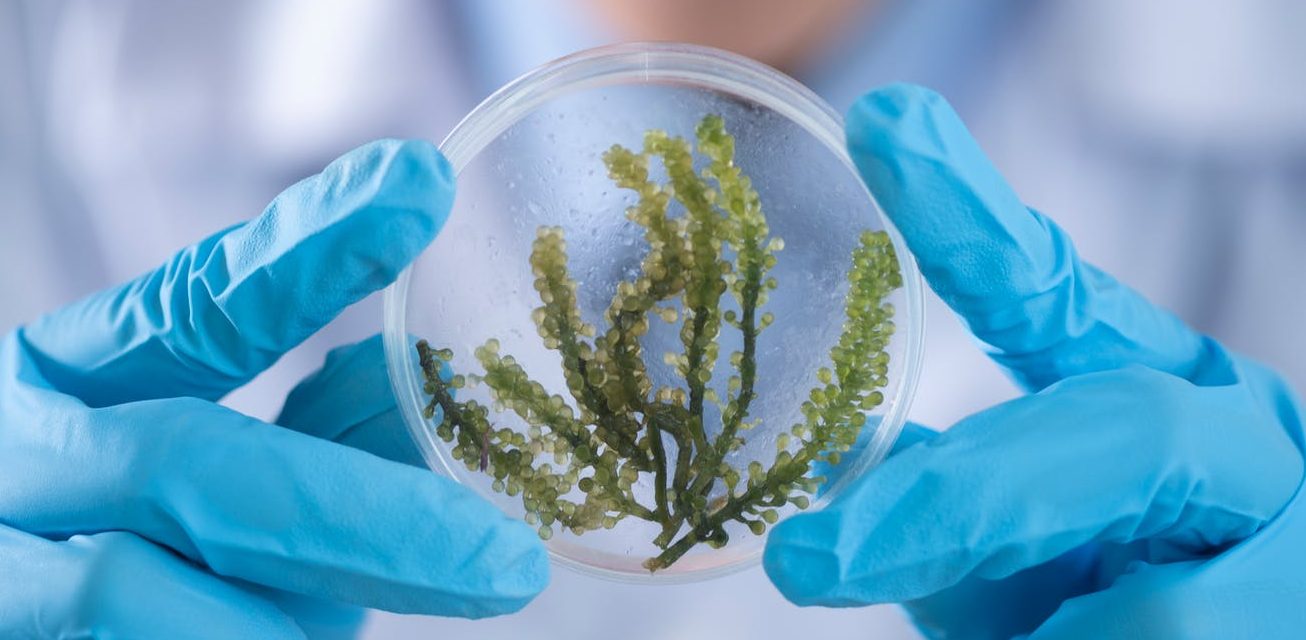

A unicellular organism, also known as a single-celled organism, is an organism that consists of a single cell, unlike a multicellular organism that consists of multiple cells. Unicellular organisms fall into two general categories: prokaryotic organisms and eukaryotic organisms. All prokaryotes are unicellular and are classified into bacteria and archaea. Many eukaryotes are multicellular, but many are unicellular such as protozoa, unicellular algae, and unicellular fungi. Unicellular organisms are thought to be the oldest form of life, with early protocells possibly emerging 3.8–4 billion years ago.[1][2]Unicellular organismValonia ventricosa, a species of alga with a diameter that ranges typically from 1 to 4 centimetres (0.39 to 1.57 in) is among the largest unicellular species
Although some prokaryotes live in colonies, they are not specialised cells with differing functions. These organisms live together, and each cell must carry out all life processes to survive. In contrast, even the simplest multicellular organisms have cells that depend on each other to survive.
Most multicellular organisms have a unicellular life-cycle stage. Gametes, for example, are reproductive unicells for multicellular organisms.[3] Additionally, multicellularity appears to have evolved independently many times in the history of life.
Some organisms are partially unicellular, like Dictyostelium discoideum. Additionally, unicellular organisms can be multinucleate, like Caulerpa, Plasmodium, and Myxogastria.
 microbiologist India
You must be logged in to post a comment.