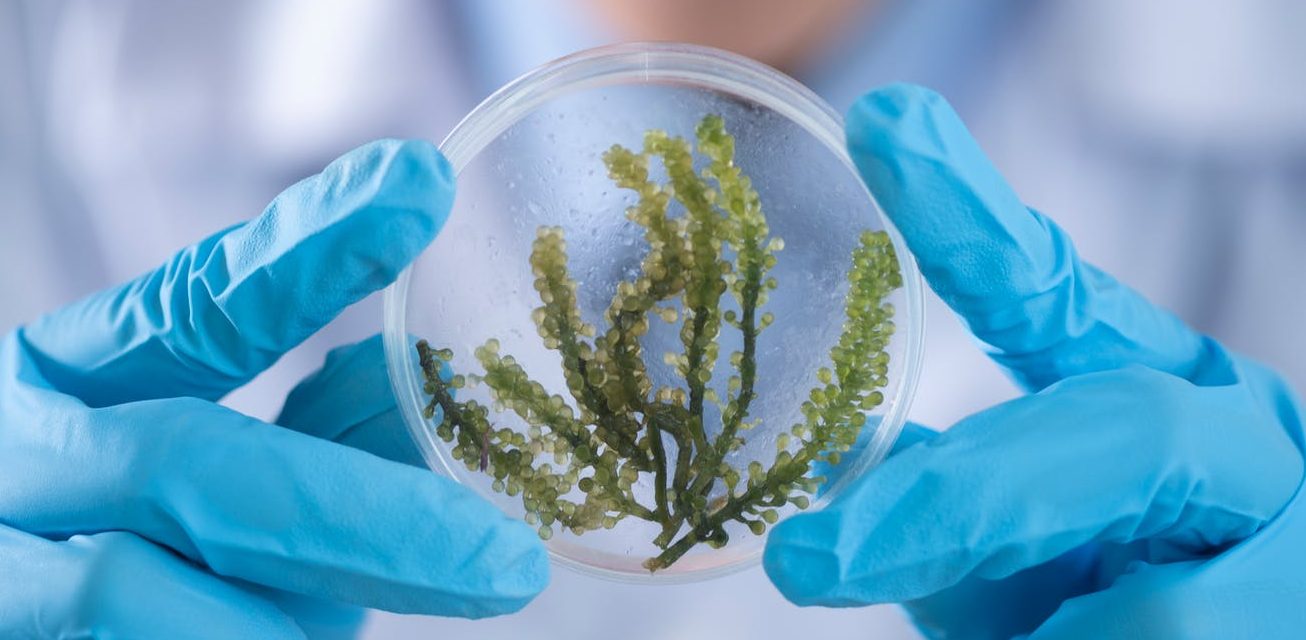
Multicellular organisms are organisms that consist of more than one cell, in contrast to unicellular organisms.[1] All species of animals, land plants and most fungi are multicellular, as are many algae, whereas a few organisms are partially uni- and partially multicellular, like slime molds and social amoebae such as the genus Dictyostelium.[2][3] Multicellular organisms arise in various ways, for example by cell division or by aggregation of many single cells.[4][3] Colonial organisms areContinue reading “Multicellular organisms”
Daily Archives: 24th Jun 2020
A unicellular organism
A unicellular organism, also known as a single-celled organism, is an organism that consists of a single cell, unlike a multicellular organism that consists of multiple cells. Unicellular organisms fall into two general categories: prokaryotic organisms and eukaryotic organisms. All prokaryotes are unicellular and are classified into bacteria and archaea. Many eukaryotes are multicellular, but many are unicellular such as protozoa, unicellular algae, and unicellular fungi. Unicellular organisms are thought to beContinue reading “A unicellular organism”
microorganism
A microorganism, or microbe,[a] is a microscopicorganism, which may exist in its single-celled form or in a colony of cells. The possible existence of unseen microbial life was suspected from ancient times, such as in Jain scriptures from 6th century BC India and the 1st century BC book On Agriculture by Marcus Terentius Varro. The scientific study of microorganisms began with their observation under the microscope in the 1670sContinue reading “microorganism”
Microbiology
Microbiology (from Greek μῑκρος, mīkros, “small”; βίος, bios, “life“; and -λογία, -logia) is the study of microorganisms, those being unicell ular (single cell), multicellular (cell colony), or acellular (lacking cells).[1][2] Microbiology encompasses numerous sub-disciplines including virology, bacteriology, protistology, mycology, immunology and parasitology. Eukaryotic microorganisms possess membrane-bound organelles and include fungi and protists, whereas prokaryotic organisms—all of which are microorganisms—are conventionally classified as lacking membrane-bound organelles and include Bacteria and Archaea.[3][4] Microbiologists traditionally relied on culture, staining, and microscopy. However, less than 1% of the microorganisms present in commonContinue reading “Microbiology”
 microbiologist India